Barcodes in Practice: How to Ensure Accurate Batch and Serial Number Recording


Barcodes in Practice: How to Ensure Accurate Batch and Serial Number Recording
In today’s business environment, where traceability and documentation are essential for quality, safety, and efficiency, barcodes play a vital role across industries. Whether you work in manufacturing, logistics, food production, or pharmaceuticals, accurate recording of batch and serial numbers is key to tracking products, managing recalls, and meeting regulatory requirements. But how can you ensure that this recording is both precise and practical in daily operations?
This article explores how to use barcodes effectively to achieve reliable batch and serial number recording – from system selection to implementation and ongoing control.
Why Batch and Serial Numbers Matter
Batch and serial numbers make it possible to identify exactly when and where a product was made, and which materials were used. This information is crucial if a fault occurs or a product needs to be recalled. In many sectors, it’s not just good practice – it’s a legal requirement.
- Batch numbers group products made under the same conditions, such as a specific production date or shift.
- Serial numbers identify individual items and are used where each product must be traceable on its own, such as in electronics or medical devices.
Without an effective system for recording these details, you risk documentation errors, production delays, and, in the worst case, loss of trust from customers and regulators.
Barcodes as the Key to Precision
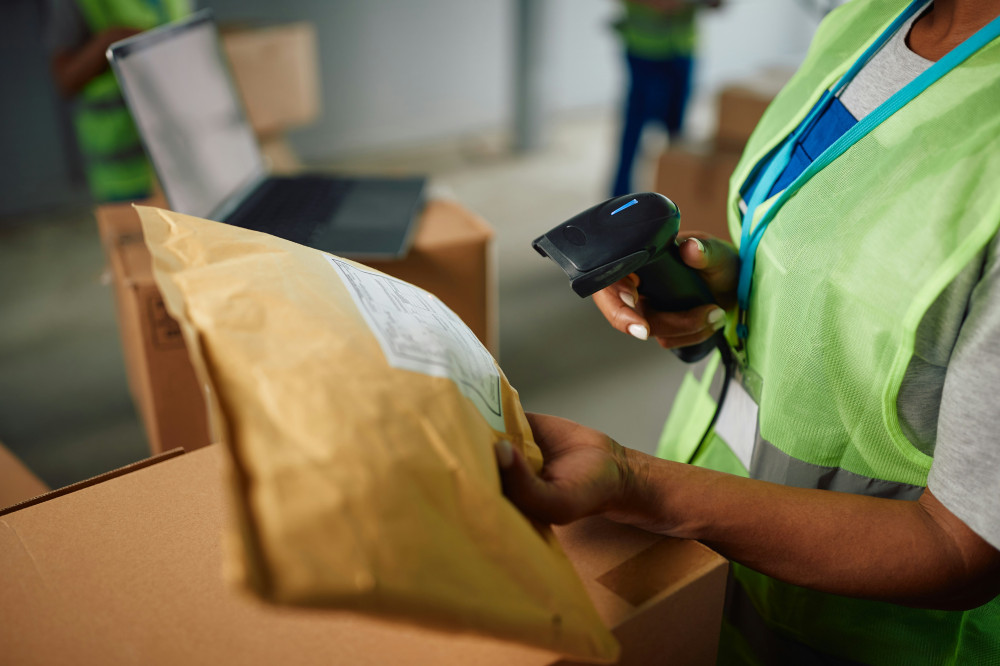
Barcodes enable fast, error-free data capture. Instead of manually typing long numbers, staff can scan a label, and the system automatically records the necessary information.
There are several barcode types suitable for batch and serial number recording:
- 1D barcodes (such as Code 128 or EAN-13) are ideal for simple data like product codes and batch numbers.
- 2D barcodes (such as DataMatrix or QR codes) can hold much more information, including serial numbers, production dates, and supplier data.
The right choice depends on how much information you need to store and what scanning equipment you use.
Læs også:



Implementing an Effective System
A successful implementation starts with mapping out where in your process batch and serial numbers should be recorded. This could be at goods receipt, during production, at packaging, or at dispatch.
- Define the data flow – What information needs to be captured, and where will it be stored?
- Choose the right equipment – Scanners should suit the environment: handheld for flexibility, fixed for production lines, or wireless for warehouse operations.
- Integrate with your ERP or warehouse management system – Ensure data is automatically transferred for reporting and traceability.
- Test and validate – Check that all barcodes can be read correctly and that data is recorded in the right place.
- Train your staff – Even the best system only works if users understand it. Provide clear instructions and demonstrate how scanning saves time and reduces errors.
Avoiding Common Pitfalls
Even small setup errors can cause major issues later. Here are some of the most common pitfalls:
- Poor label quality – Low print quality or incorrect placement can make barcodes unreadable.
- Lack of standardisation – If different departments use different formats, data becomes difficult to compare.
- Too many manual steps – The more often staff have to enter data manually, the higher the risk of mistakes.
- No regular checks – Systems should be tested periodically to ensure scanners, software, and labels still perform as expected.
By establishing clear procedures for inspection and maintenance, you can prevent many of these problems.
The Benefits of Accurate Recording
When batch and serial numbers are recorded correctly, you gain more than just traceability – you gain valuable insight. The data can be used to analyse production flow, identify root causes of defects, and improve quality.
It also makes handling complaints and recalls much easier, as you can quickly identify affected products. This saves time, money, and protects your company’s reputation.
The Future: Automation and Integration
The trend is moving towards more automated solutions, where barcodes are combined with RFID tags, sensors, and cloud-based systems. This allows data capture to happen automatically, without manual scanning.
For many businesses, however, barcodes remain the backbone of traceability. They are cost-effective, flexible, and widely understood – and with the right setup, they can deliver accuracy comparable to far more expensive technologies.
Conclusion: Small Lines, Big Impact
Barcodes may seem like a simple technology, but they are the foundation of modern traceability. Used correctly, they ensure that batch and serial numbers are recorded accurately, efficiently, and reliably – every time.
It takes planning, standardisation, and continuous attention, but the rewards are significant: fewer errors, better documentation, and a more efficient operation across production and logistics.
Læs også: